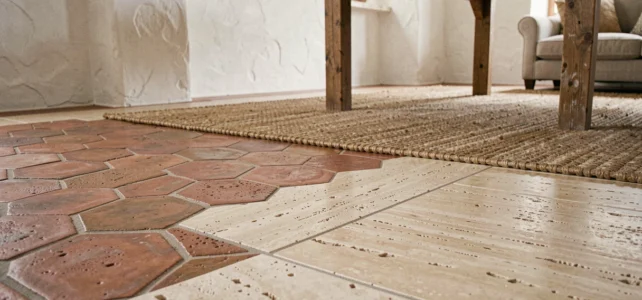
The tomette, with its warm terracotta hues, has adorned French interiors for centuries. Travertine, a limestone with beige and ivory tones, evokes Mediterranean palaces. Combining these two materials in the same room creates a dialogue between clay and stone, between earthy red and mineral softness. The result can be striking, provided that a few compositional principles are respected.
Dominant material and accent material: the rule that changes everything
You may have noticed that a room where two coverings occupy the same surface often seems confusing? The eye doesn’t know where to settle. This is the main trap when trying to mix tomette and travertine.
The solution lies in a simple principle: one material dominates, the other serves as an accent. Specifically, one covers the majority of the floor or walls, while the other is used in a specific area (a backsplash, a tile rug, a door frame).
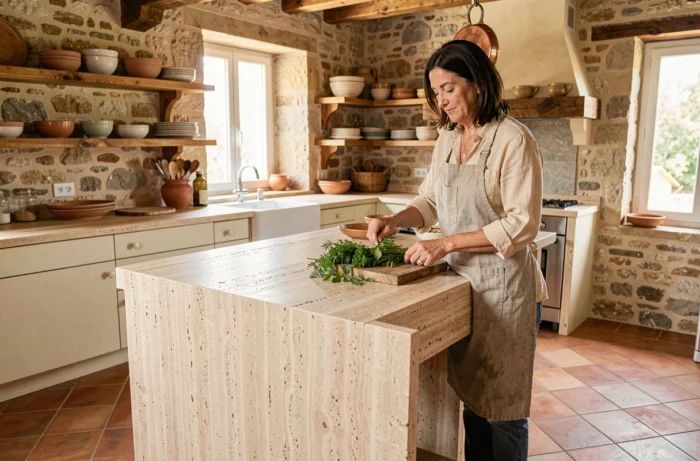
In an open kitchen, for example, travertine can cover the entire living room floor while the tomette defines the cooking area. This visual hierarchy avoids clutter and gives each material the necessary space to exist. Before deciding how to combine tomette and travertine, first determine which will take the lead role in your room.
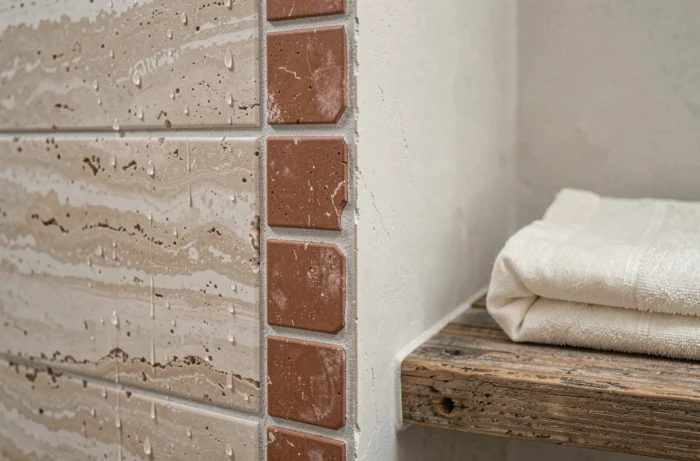
The opposite also works. In a bathroom, a red tomette floor can provide a warm base, while travertine on the wall adds a lighter mineral note. The idea remains the same: avoid visual parity between the two materials.
Warm tones of tomette and travertine: managing color temperature
Tomette and travertine share a warm palette. This is their common ground, but also their risk. Two materials with warm tones in a poorly lit room can create a stifling atmosphere.
The trap of an overly warm room
A north-facing living room with a red tomette floor and golden travertine walls will quickly appear dark and saturated. Recent sources on interior decoration recommend lightening the palette with cool elements: a black metal piece of furniture, white linens, or a wall painted in a muted sage green.
The thermal contrast saves the balance of a poorly lit room. A light gray sofa, a cold stone countertop, or even a simple mirror placed facing the window is enough to temper the whole.
When natural light works in your favor
In a sun-drenched room, the duo works without counterbalance. The light reveals the color variations of the travertine (ivory, sand, pink) and makes the terracotta tones vibrate. It is under these conditions that the combination is most successful.
A detail often overlooked: test your samples in the actual light of the room. A beige travertine can lean towards gray under cold artificial lighting or towards gold in natural light. Lay the tiles on the floor, observe them at different times of the day. This step avoids many disappointments after installation.
Color and width of joints: a detail that changes the perception of the floor
There is much talk about the choice of tiles. There is rarely talk about the joints. This is a mistake, as the joint influences the final ambiance as much as the material itself.
With a tomette-travertine duo, a joint in a median tone between the two materials unifies the transition. A rosy beige, for example, links the red of the terracotta and the ivory of the stone. A white joint would create too sharp a break. A black joint would harden the overall effect.
- Stone tone joint (light beige): softens the contrast, ideal when tomette and travertine are adjacent on the floor in the same room.
- Terracotta tone joint (rosy beige): warms the travertine area, creating a more pronounced chromatic continuity.
- Light gray joint: a neutral option that works if you are already incorporating wood or metal into the decor.
The width of the joint also matters. A wide joint (more than a few millimeters) emphasizes the rustic aspect, perfect in a Provençal farmhouse. A thin joint modernizes the whole and suits a contemporary apartment.
Room by room: where the tomette-travertine duo works best
Not all rooms lend themselves to this combination. Here are the most convincing configurations.
Open kitchen and living room
This is the ideal playground. The tomette on the kitchen side adds character and withstands splashes well. The travertine takes over in the living area, laid in a Roman opus for an authentic effect. The transition between the two areas occurs at the change of function, creating a natural delineation without a partition.
Bathroom with travertine walls and tomette floor
The terracotta tiling on the floor, treated with an appropriate water-repellent, provides a warm touch underfoot. The travertine on the wall or in the shower enclosure completes the mineral ambiance. This combination evokes Mediterranean bathrooms without falling into catalog decoration.
Entryway and hallway
A large-format travertine floor in the hallway, then a transition to hexagonal tomette at the entrance: the visitor immediately perceives a change in register. The entry gains personality, and the hallway elegance.
- Favor tomette in short passage areas (entry, door threshold) where its smaller format creates a rug effect.
- Reserve travertine for larger surfaces where its veins and texture have room to unfold.
- Avoid placing the two materials side by side without transition (a brass or wood threshold facilitates the connection).
Daily maintenance of a natural stone and terracotta floor
These two materials are porous. Old, unglazed tomette absorbs stains if not protected. Travertine reacts to acidic products (vinegar, lemon) that attack limestone.
Apply a water-repellent to both materials before use. This invisible treatment reduces porosity without altering appearance. It is renewed every two to three years depending on usage.
For regular cleaning, a neutral pH soap diluted in warm water is sufficient. Aggressive detergents and anti-limescale products should be avoided on travertine. Tomette withstands conventional cleaners a bit better, but gentle maintenance prolongs its natural patina.
The tomette and travertine duo requires a bit more attention than a ceramic tile floor. This slight investment in maintenance is the price of a living floor, which patinas over time instead of simply aging.