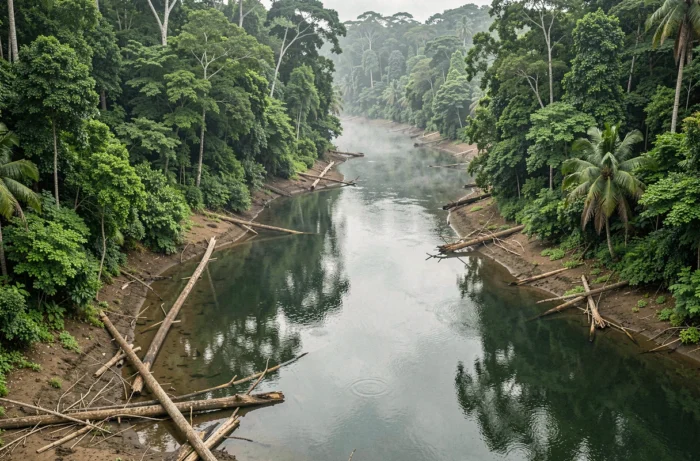
When thinking of great rivers, the Nile, the Danube, or the Amazon naturally come to mind. However, rivers whose names start with the letter Q remain much more discreet. Yet, they traverse varied landscapes, irrigate historic cities, and sometimes reserve spectacular natural phenomena.
The Qiantang, a Chinese river between river tourism and extreme wave
The Qiantang flows through Zhejiang province in China before emptying into the sea near Hangzhou. This river owes its worldwide reputation to its tidal bore, a phenomenon where waves can exceed several meters in height.
Recent videos show spectators being thrown by the wave onto the developed banks. The coexistence of urban promenades, aerial highways, and this violent natural phenomenon creates a striking contrast. Hangzhou has managed to turn this uniqueness into an asset: themed cruises now navigate the Qiantang, offering sunset viewing, bridge illuminations, and even a safe approach to the tidal bore.
To explore the rivers starting with Q to know, the Qiantang serves as an ideal starting point as its profile blends history, tourism, and a rare geophysical phenomenon.
What sets this river apart from other river destinations is the flexible cancellation policy implemented by local agencies. The tidal bore depends on lunar cycles and weather conditions. Operators have adapted their offerings so that travelers do not lose their reservation if the wave does not make an appearance. The Qiantang has become a laboratory for river tourism around an extreme phenomenon.

Less known Q rivers: from Queensland to South America
Have you ever heard of Quilpie Creek in Australia? This watercourse flows through the arid outback of Queensland. Its flow varies greatly with the seasons: nearly dry during the hot months, it can turn into a brown torrent during tropical rains.
In South America, the Queguay winds through Uruguay. This modest river feeds agricultural areas and joins the Uruguay River before the estuary of the Rio de la Plata. Its watershed is home to a discreet but significant biodiversity for the region.
Common characteristics of these lesser-known rivers
- Their flow heavily depends on local rainfall patterns, making them unpredictable for regular navigation
- They traverse sparsely urbanized areas, where the river remains the main transportation and irrigation axis
- Their low notoriety protects them from mass tourism but also makes them vulnerable to a lack of investment for the preservation of their ecosystems
These Q rivers share a common point: their local role far exceeds their international visibility. They structure rural economies without ever appearing in classic travel guides.
River biodiversity and watercourse preservation challenges
The biodiversity of rivers is receiving increasing attention. According to the Fleuves.org network, the available data on the ecological health of rivers and streams remains fragmented in many countries. The Q rivers are no exception to this reality.
The Qiantang, for example, is under urban pressure from Hangzhou and its metropolitan area. Modern infrastructures (bridges, dikes, concrete promenades) alter the riverbed and disrupt natural sedimentation cycles. The urban scenography around the tidal bore masks real ecological tensions.
For the more modest rivers, the problem is different. The lack of regular scientific monitoring prevents the long-term measurement of fish populations or water quality. A river that does not bear a famous name rarely attracts research budgets.
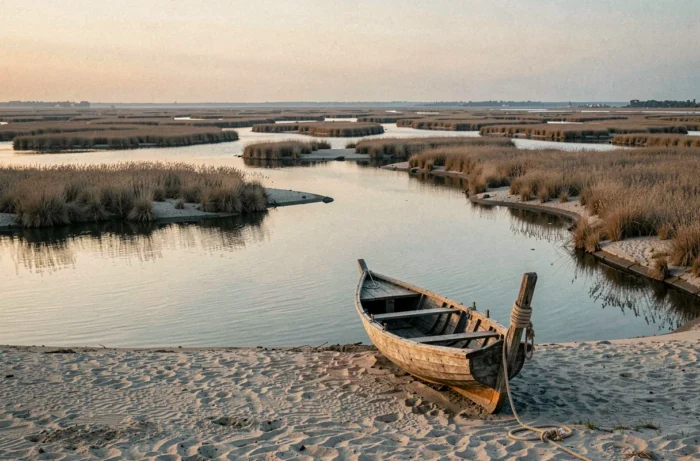
Why care about forgotten rivers
Every watercourse, even minor ones, plays a role in the hydrological cycle of its region. An unnamed river irrigates as much land as a mythical river. The difference lies in media visibility, not ecological function.
Initiatives for the census and mapping of watercourses are progressing, driven by networks like Fleuves.org that compile data and methodologies. This work allows for a better understanding of the connections between watersheds, even for rivers whose names do not appear in any travel narrative.
River travel: how these Q rivers renew the cruise offering
River tourism is no longer limited to the great European classics. Cruises on the Qiantang illustrate a trend: offering an experience around a natural phenomenon rather than just a simple landscape. Passengers do not come to admire picturesque shores, but to observe a raw force framed by urban staging.
This approach appeals to family or group travelers, attracted by the spectacular aspect and the educational dimension. The nighttime illuminations of the bridges in Hangzhou add an aesthetic layer to the experience.
- Sunset cruises combine calm navigation and waiting for the tidal bore
- Nocturnal circuits highlight the architecture of the bridges and the skyline of Hangzhou
- Packages with secure observation of the tidal bore include elevated viewpoints, distanced from the wave impact zone
Other Q rivers could follow this model if local operators invested in a structured offering. The potential exists, particularly in South America where river tourism remains embryonic on secondary waterways.
Rivers that start with Q will probably never top travel search results. Their interest lies precisely in this gap between their discretion and what they offer to those who take the time to stop. The Qiantang has proven that an unknown river can become a destination in its own right, provided that natural heritage, tourist infrastructure, and risk management are articulated.