Each season brings its share of pieces presented as must-haves. Aviator jacket, barrel jeans, perforated ballerinas: the lists grow longer, but the result often resembles a fragmented wardrobe. The fashion trends of this season benefit from being read differently, not piece by piece, but as coherent style directions to draw from according to one’s silhouette and daily life.
Choose a style direction rather than accumulating trendy pieces
Have you ever noticed that a look spotted on a runway loses all its effect when worn in isolation, without the rest of the silhouette? That’s the trap of “piece by piece” shopping. A structured faux leather jacket worn with mismatched bottoms tells no story.
The approach that works this season is to choose a single strong direction and stick to it. The autumn-winter 2026-2027 runways outline at least four readable axes: layering (calculated overlays), transparency, femininity shift (powdery lines, tailored suits), and utilitarian travel chic. Each of these axes offers a logic of proportions, materials, and colors that stands on its own.
A wardrobe built around a single direction allows for easy mixing of pieces. Three or four targeted purchases then replace a dozen isolated impulses. It’s also the most direct way to achieve a recognizable style, the kind where people ask you “where do you find your clothes?” instead of “what’s that jacket?”.
To explore these axes without getting lost in catalogs, the clothing trends to find on Trending provide a good starting point to visualize pieces that resonate from one look to another.
Layering and proportions: the real fashion trend of the cold season
Layering is not just about piling a sweater over a shirt. This season, the overlays play on the contrast of volumes: a fitted piece under a loose piece, or vice versa. The idea is to create a readable silhouette even with multiple layers.
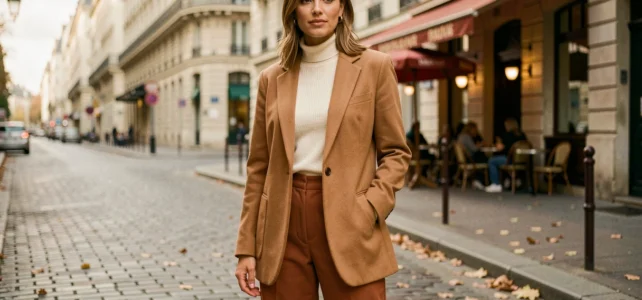
In practical terms, this might look like a fine turtleneck slipped under an oversized blazer, worn open over straight trousers. Each layer has a visual function. The turtleneck structures the upper bust, the blazer broadens the shoulders, and the straight trousers elongate the leg.
Adapting layering to your body type
On a petite silhouette, it’s better to limit layers to two and keep a slim or straight bottom to avoid shortening the line. Taller individuals can afford a long coat on top, that famous statement coat that becomes the centerpiece of the look.
The rule of opposing proportions remains the most reliable guide: voluminous top and fitted bottom, or fitted top and wide bottom. The runways this autumn-winter confirm this logic, with silhouettes that systematically alternate a structured element and a fluid element.
- Fine turtleneck + oversized blazer + straight trousers: three layers, three functions, sharp silhouette
- Open shirt over a tank top + cropped leather jacket: light layering for mid-season, suitable for variable days
- Mid-length dress + structured jacket with marked shoulders: femininity and architecture, a combination very present on the runways this season
Transparency and femininity shift: two axes for a refined wardrobe
Transparency returns every year, but this season it is worn differently. We are not talking about completely transparent tops worn over bare skin. Transparency 2026 layers over opaque pieces to create a play of textures: a voile blouse over a satin camisole, an organza skirt over a dress base.
This principle aligns with the femininity shift observed on the runways. Dresses in powdery shades, impeccably tailored suits, and plays of transparency compose a wardrobe where elegance comes through material rather than bright color. The season’s trio of materials (denim, smooth leather, suede) fits well into this direction, provided one sticks to sober and natural tones.
What profile suits this direction?
The femininity shift particularly suits those looking for a chic style without falling into the formal. A lightweight wool suit worn with white sneakers, for example, breaks the “office” vibe while maintaining a polished line.
Transparency works best on silhouettes that embrace a visible layering game. If you prefer discretion, a single transparent detail is enough: sleeves of a blouse, shoulder inserts, hem in voile.
Travel chic and utilitarian style: building versatile seasonal looks
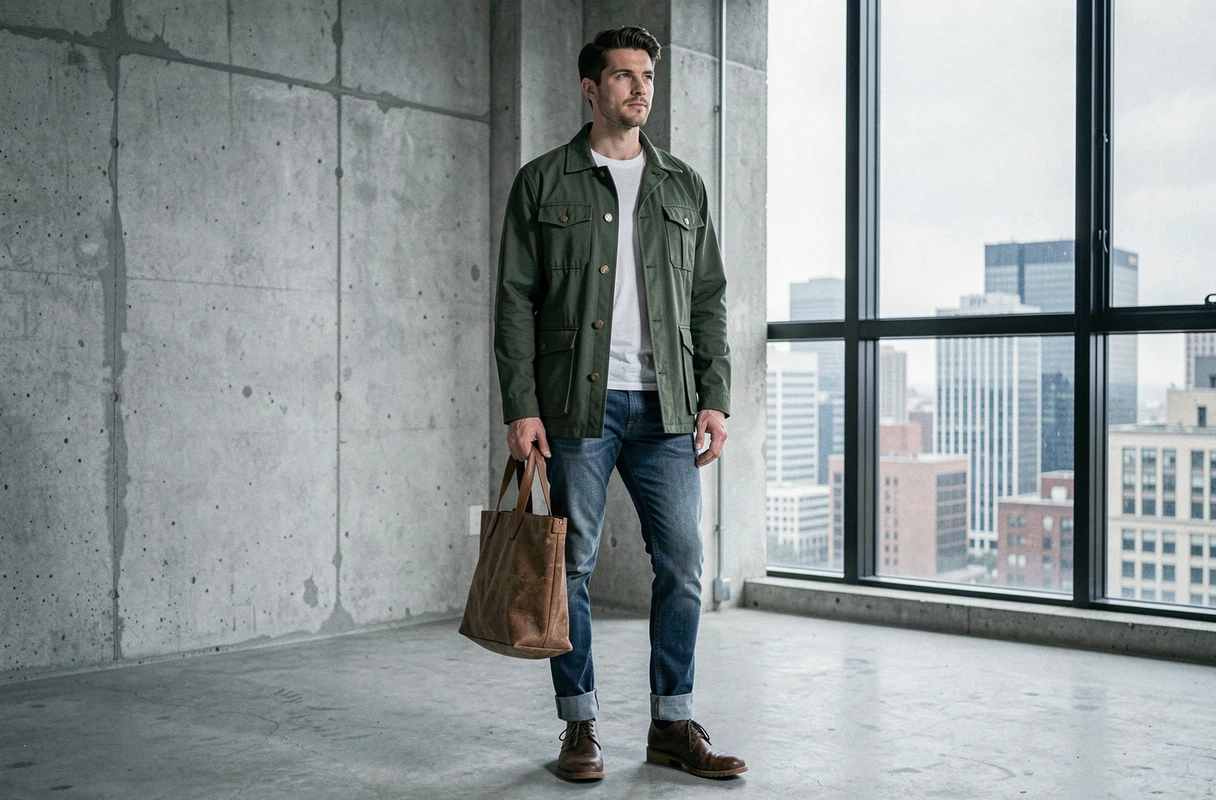
The last strong axis of this season addresses those whose daily life alternates between travel, active days, and outings. Travel chic mixes utilitarian codes (patch pockets, functional cuts, durable materials) with a polished finish.
The premium military style illustrates this trend well. Khaki, olive green, and brown are worn this season in fitted cuts, far from shapeless cargo styles. Burgundy makes an unexpected color accent on a parka or mid-season jacket, adding character without breaking the coherence of the palette.
- Structured parka in thick fabric, olive shade, worn belted: utilitarian yet defined at the waist
- Brushed cotton cargo pants, straight cut, paired with a fine knit crew-neck sweater: functional and neat
- Smooth leather crossbody bag, compact size: replaces a backpack without sacrificing practicality
This style has the advantage of working on almost all body types. Cuts remain straight or slightly fitted, materials hold up in daily life, and colors combine effortlessly with each other.
Building a unique style this season comes down to making a clear choice among these directions rather than chasing every trendy piece. A well-maintained axis is worth more than a scattered wardrobe. Whether the preference leans towards architectural layering, textured transparency, the refinement of the femininity shift, or the efficiency of travel chic, the principle remains the same: a few thoughtfully chosen pieces together create a stronger silhouette than a collection of isolated favorites.