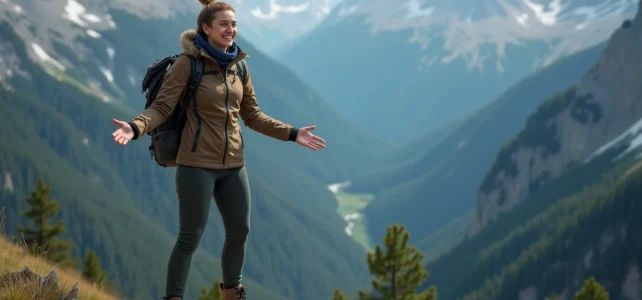
Which activities really deserve a detour among the mass of current tourist proposals? The experiential travel market has been restructuring for several years around formats that go beyond the simple guided tour. Comparing these formats by type of experience, duration, and level of immersion allows us to identify those that transform an ordinary stay into a lasting memory.
Comparative table of travel experience formats
The activities offered to travelers are now divided into distinct categories, each with its own characteristics. The table below summarizes the main formats identified by players in the experiential tourism sector.
| Activity Format | Typical Duration | Level of Immersion | Target Audience |
|---|---|---|---|
| Skillcation (learning a local skill: cooking, crafts, photography) | Half-day to full stay | High | Travelers seeking skills |
| Nature and adventure excursion (hot air balloon, kayaking, hiking) | Several hours to one day | Medium to high | Families, sports enthusiasts, couples |
| Immersive heritage tourism (skill workshops, local visits) | Half-day | Medium | Curious, culture lovers |
| Transformative experience (retreat, participatory scientific mission, expedition) | Several days to several weeks | Very high | Experienced travelers |
| Experience gift (hot air balloon ride, unusual overnight stay, skydiving) | Several hours to one night | Variable | Gift offering, occasional discovery |
The “level of immersion” column reflects the degree of interaction with the place, its inhabitants, or a skill. Short formats (experience gift, classic excursion) offer an intense but brief discovery. Skillcations and transformative experiences rely on duration to anchor learning.
To explore a wide range of proposals categorized by theme, one can consult the must-see activities on 1001 Découvertes and filter according to one’s desires.
Skillcation and craftsmanship tourism: rapidly growing activities
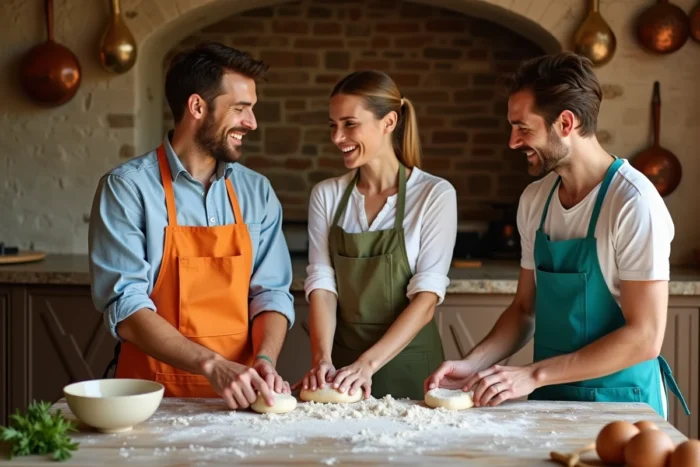
The term “skillcation” refers to a stay where the main activity consists of acquiring a concrete skill. Since 2024, this format has been identified as a structuring trend in experiential travel, according to Le Figaro Voyages (January 2026). Local cuisine, regional crafts, scuba diving, landscape photography: travel becomes a learning project rather than a simple accumulation of visits.
What distinguishes a skillcation from a classic tourist workshop is the depth of engagement. A one-hour pottery class in a tourist city is entertainment. A three-day internship with a potter in a rural area, with accommodation on-site, falls into the skillcation category.
In France, regions with identified artisanal skills (vineyards, cheese factories, textile workshops) capture this demand. Heritage tourism now integrates these participatory dimensions, well beyond visiting monuments.
Criteria to distinguish a true skillcation from a marketing workshop
- The duration of the activity exceeds half a day and includes measurable educational progression
- The instructor is a professional in the taught trade, not a generalist tourist guide
- The participant leaves with a concrete product or a transferable skill (mastered recipe, acquired technique)
Nature experiences in France: hot air ballooning, kayaking, and unusual overnight stays
Outdoor activities remain the foundation of experiential tourism in France. Hot air ballooning is among the most sought-after experiences as a gift or stay activity. The flight offers an aerial perspective on the landscapes, with an effort/emotion ratio that is hard to match for an activity lasting a few hours.
River or sea kayaking, hiking on marked trails, and forest courses make up the backbone of the nature offering in most French destinations. These activities share a common point: they engage the body as much as attention, which enhances the memorization of the experience.
Unusual overnight stays (treehouse, transparent bubble, yurt) add a sensory dimension to the stay. Sleeping in an unusual setting alters the perception of the place much more than a standard hotel room. This format appeals to both couples and families with children.
Transformative travels: when the activity redefines the stay
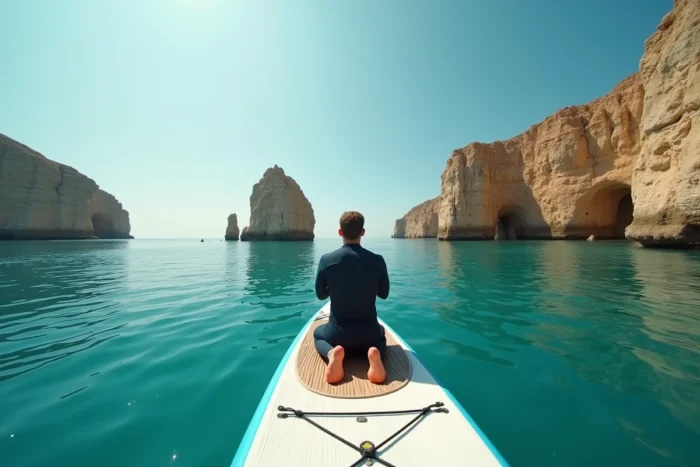
The segment of transformative experiences stands in stark contrast to fast-consumption tourism. Reconnection retreats, participatory scientific expeditions, conservation missions in natural environments: these formats consider travel as a life project, not as a one-off leisure activity. The high-end leisure travel market shows a clear shift towards these immersive proposals, according to Fortune Business Insights (2025-2026 data).
The difference with a classic excursion lies in three elements. The traveler actively participates in a mission or a collective goal. The duration extends over several days, sometimes several weeks. The return to everyday life comes with a measurable change in perspective.
What these experiences require from the traveler
- A time availability greater than a long weekend
- A tolerance for relative discomfort (simple accommodation, variable weather conditions)
- A personal commitment to the process, not a spectator’s posture
- A budget often higher than short formats, justified by specialized support
In contrast to gift formats or one-day excursions, these experiences are not consumed à la carte. They require prior preparation and motivation that naturally filters the audience.
Choosing your activity based on duration and level of commitment
The choice of an activity depends less on the destination than on the available time and the desired level of involvement. A weekend calls for a nature experience or an experience gift, while a stay of a week or more opens the door to skillcations and transformative formats.
Landscapes matter, but the activity practiced determines the quality of the memory. A hot air balloon ride over the Loire Valley and an identical flight over the Luberon produce comparable emotions. What varies is the cultural context surrounding it: vineyards, local markets, architectural heritage.
Experiential tourism in France and around the world is now segmented by activity format rather than by destination. This framework, focused on what the traveler does rather than where they go, helps identify experiences that truly match their expectations, without getting lost in interchangeable lists of places.