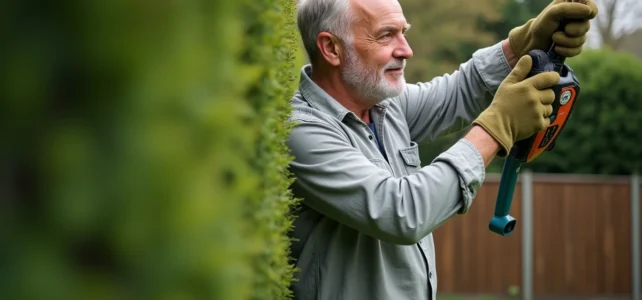
When faced with a hedge of thuja that exceeds two meters, a classic hedge trimmer requires a ladder. The telescopic hedge trimmer solves this problem by adding an extendable handle that allows you to work with your feet on the ground. The next step is to choose the right model, as the length of the pole, the type of blade, and the power source can radically change the experience in the field.
Blade Length and Cutting Diameter: What Determines the Result
Before comparing brands or voltages, it’s efficient to start with a simple piece of information: the diameter of the branches to be cut. A laurel or photinia hedge produces significantly thicker shoots than a privet hedge. The spacing of the blade’s teeth directly determines the maximum allowable diameter.
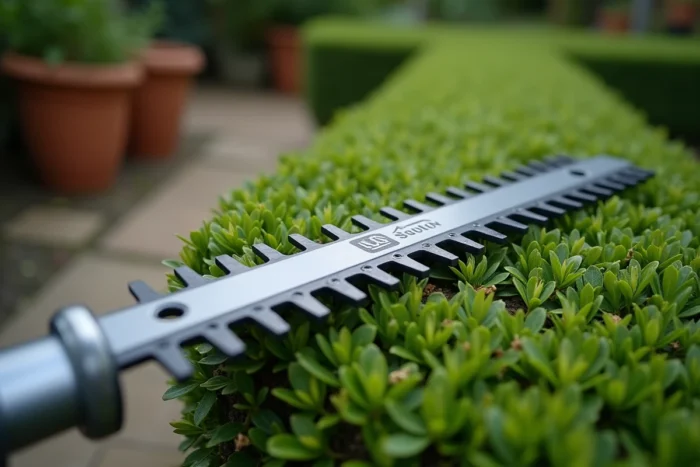
On a telescopic hedge trimmer, the blade length often ranges from 40 to 50 cm. This is a deliberate compromise: a shorter blade reduces the weight at the end of the pole, which limits arm and shoulder fatigue when working overhead.
Models with double-action blades (both blades move in opposite directions) vibrate less and cut more cleanly. This is the standard on most recent telescopic models, but some budget options still have a single-action blade, which is noisier and less precise. It is recommended to check this point before purchasing, especially for regular use.
To delve into the technical specifications and compare models on the market, detailed sheets can be found on taille-haie-telescopique.com that facilitate filtering by criteria.
Battery or Corded: Which Telescopic Hedge Trimmer for Your Terrain
The choice of power source depends less on personal preference and more on the garden’s layout. A fenced area of 300 m² with an accessible outdoor outlet is perfect for a corded model. A large property with hedges on the periphery, far from any electrical source, necessitates a battery or gas-powered model.
Corded for Small and Medium Gardens
The corded telescopic hedge trimmer remains the lightest in its category. Without a battery or tank, the total weight drops significantly below that of cordless models. This is a real advantage when holding the tool with arms extended for an hour.
The cable constraint can be managed with a quality extension, but beyond about twenty meters, the cord becomes a real handicap, especially when maneuvering around an L-shaped hedge.
Battery for Freedom of Movement
Current battery platforms (18 V and 36 V) often share their batteries with the rest of the garden tools from the same brand. If you already own a brush cutter or blower from the same range, you can reuse the same batteries, which reduces the entry cost. Bosch, Ryobi, or Makita operate on this multi-tool platform principle.
A standard battery’s autonomy generally covers one to two trimming sessions, but feedback varies on this point depending on the thickness of the hedge and the battery’s capacity. Having a second charged battery prevents interruptions.
Gas-Powered Models Declining for Domestic Use
Gas-powered telescopic hedge trimmers are powerful but heavy, noisy, and subject to maintenance constraints (oil changes, spark plugs, filters). For an individual who trims two to three times a year, the effort-to-benefit ratio clearly leans toward electric models.
Adjustable Head and Ergonomics of the Telescopic Hedge Trimmer
Trimming the top of a tall hedge is completely different from trimming the side face. The working angle changes entirely. This is why a pivoting cutting head makes the difference between a pleasant model and one that is cumbersome to use.
- An adjustable head with multiple positions (often five to seven notches) allows you to tackle the top of the hedge flat, without straining your wrists
- The rotating rear handle, present on some models, improves grip during vertical passes along the hedge
- A harness or shoulder strap distributes the weight across the torso, which halves fatigue during long sessions
The overall balance of the tool is often overlooked. A poorly balanced telescopic hedge trimmer pulls forward and forces constant compensation with the rear arm. In-store, simply unfolding the pole and holding the tool in a high cutting position for thirty seconds will reveal whether the weight distribution is suitable.
Trimming Seasons and Impact on Model Choice
The League for the Protection of Birds recommends avoiding severe trimming of hedges between mid-March and the end of July, during the nesting period. In practice, this concentrates major cutting work into two windows: the end of winter (February-March) and autumn (September-October).
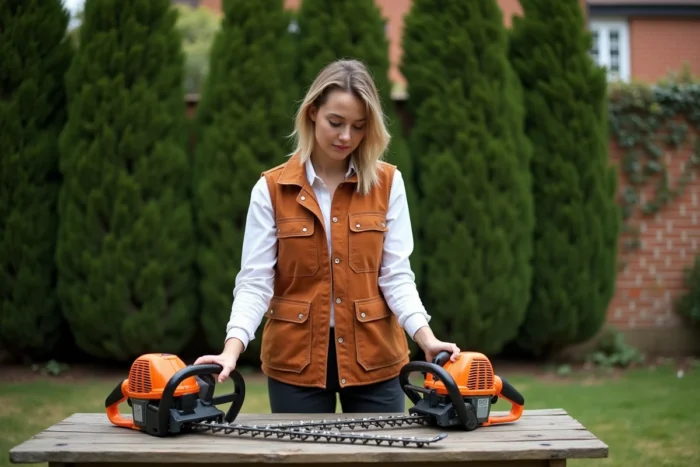
This constraint has a direct consequence on the choice of telescopic hedge trimmer. The trimming windows are short, sometimes reduced to a few days of favorable weather. A battery model starts instantly, requires no preparation, and can be used early in the morning or late in the day without disturbing the neighbors with noise.
A gas model, in this domestic context, loses its main advantage (unlimited autonomy) since trimming rarely exceeds an hour at a residential hedge.
Blade Maintenance and Lifespan of the Telescopic Hedge Trimmer
After each use, cleaning the blade with a brush followed by a spray of silicone lubricant is sufficient to maintain cutting quality. Blades clogged with sap strain the motor and reduce the lifespan of the entire unit.
- Sharpen the teeth once per season with a flat file suitable for the spacing
- Check the play between the two blades: an abnormal rattling indicates loosening of the fixing screws
- Store the tool with the pole folded, in a dry place, with a blade guard
For battery models, removing the battery before winter storage and keeping it charged to half capacity extends its longevity.
The telescopic hedge trimmer remains a specialized tool that does not replace a classic model for low hedges. The ideal solution for a garden with hedges of varying heights is to combine both, choosing a common battery platform to limit the number of chargers.