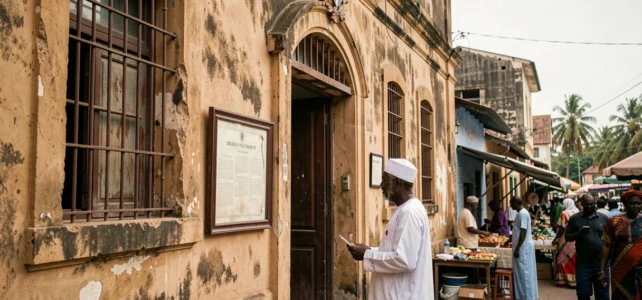
The French colonization in Africa is not just a timeline of military conquests. It produced institutional, monetary, and legal architectures, some of which survive in 2026, while others collapse under the pressure of rapid geopolitical reconfigurations. Understanding this legacy requires distinguishing structural mechanisms from simplifying narratives.
CFA Franc and Monetary Sovereignty: What the 2020 Reform Changed and What It Did Not Touch
The monetary system inherited from the colonial period remains the most tenacious institutional marker of the French empire in Africa. The reform decided in December 2019, ratified by a French law in May 2020, eliminated two structural elements: the obligation for UEMOA countries to deposit half of their foreign exchange reserves with the French Treasury and the formal presence of French representatives in the governance bodies of the BCEAO.
On paper, this is a turning point. In reality, the fixed parity with the euro and the guarantee of unlimited convertibility remain. It is precisely these two pillars that structure monetary dependence. As long as the parity is tied to a foreign currency with the guarantee of the French Treasury, the monetary policy of the affected countries cannot freely adjust to the realities of their local economies.
We observe that projects for a transition to an autonomous West African common currency (often referred to as eco) have still not materialized. The distinction between symbolic reform and effective monetary sovereignty remains a blind spot in public debate, including in France. The colonial history has produced a framework that the formal decolonization of the 1960s did not dismantle.
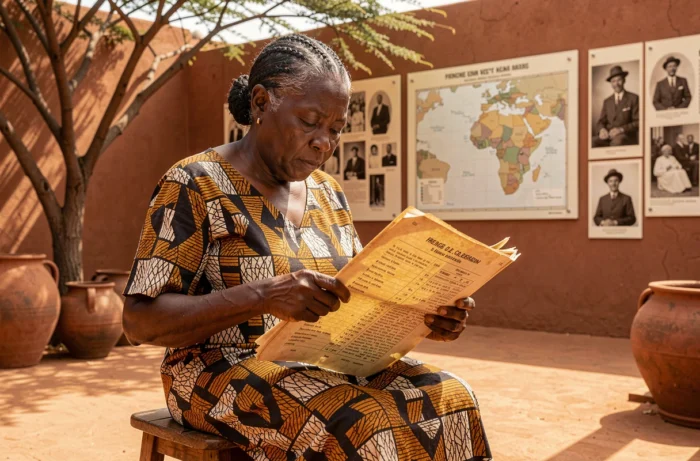
To accurately map the African countries colonized by France, one must go back to the two distinct empires that structured this expansion: French West Africa (AOF) and French Equatorial Africa (AEF), along with the Maghreb, Madagascar, and the mandated territories.
French Military Withdrawal from Africa: The End of a Postcolonial Defense Architecture
Between 2022 and 2025, France was forced to withdraw its troops from Mali, Burkina Faso, Niger, Chad, Côte d’Ivoire, and Senegal. These withdrawals did not result from a negotiated diplomatic timetable. They were triggered by coups, massive popular mobilizations, and unilateral breaks of defense agreements.
By 2026, only two permanent French bases remain in Africa: Djibouti and Gabon. This contraction ends a military architecture directly inherited from the decolonization agreements signed in the 1960s. These agreements provided for the maintenance of French garrisons on the soil of the new independent states, often in exchange for security guarantees.
The term Françafrique, used since the 1950s to describe the influence relations between Paris and its former colonies, precisely referred to this network of military bases, parallel diplomatic networks, and asymmetrical economic ties. The disappearance of almost the entire Sahelian military apparatus marks a structural break, not just a tactical adjustment.
Colonial Legal and Administrative Legacy: The Indigenat Code and Its Extensions
The French colonial empire operated on a fundamental legal distinction between citizens and subjects. The indigenat code, applied from 1881 in Algeria and then extended to all colonial territories, subjected colonized populations to an exceptional penal regime. Collective fines, forced labor, movement restrictions: these measures had no equivalent in the metropole.
This dual regime structured territorial administrations. The borders drawn by colonization, often without regard for ethnic and linguistic realities, remained almost intact after independence. The principle of uti possidetis juris, adopted by the Organization of African Unity in 1964, froze these colonial boundaries as the borders of the new states.
The consequences are still evident in the mapping of contemporary conflicts:
- Tensions between pastoral and sedentary communities in the Sahel follow colonial administrative lines that ignored transhumance corridors
- The artificial borders of Cameroon result from the division between French and British empires after World War I
- The linguistic situation in many countries (French as the sole official language in multilingual states) perpetuates a colonial administrative choice that has never been structurally challenged
Colonial Extractive Economy: Rent Cultures and Structural Dependence
The French colonial economy in Africa was based on an extractive model oriented towards the metropole. The colonial territories produced raw materials, not processed goods. Peanuts in Senegal, cocoa in Côte d’Ivoire, cotton in Chad, phosphates in Togo: each colony was assigned an agricultural or mining specialization dictated by metropolitan needs.
This model left economies structurally dependent on the export of unprocessed raw materials. The share of manufacturing industry in the GDP of most former French colonies remains among the lowest on the continent today.
Forced labor, formally abolished in 1946, constituted the foundation of this system for decades. Major colonial infrastructure projects (Congo-Ocean railway, roads in French Sudan) mobilized hundreds of thousands of African workers under conditions documented as deadly by the colonial administration’s own reports.
Algeria: A Unique Case in the French Colonial Empire
Algeria occupies a singular place. Colonized from 1830, administratively integrated as a French department, it underwent a settler colonization that radically transformed the land and demographic structure of the territory. The Algerian War of Independence (1954-1962) remains the longest and most violent conflict of French decolonization.
The repercussions of this war continue to shape Franco-Algerian relations and memory debates in France, well beyond the strictly historical framework.

The French colonial legacy in Africa is not a closed object. The military withdrawal from the Sahel, tensions surrounding the CFA franc, and memory claims show that the structures established between the 19th century and independence continue to produce measurable political effects. Formal decolonization transferred sovereignties. It did not always transfer the economic and institutional levers that make them effective.