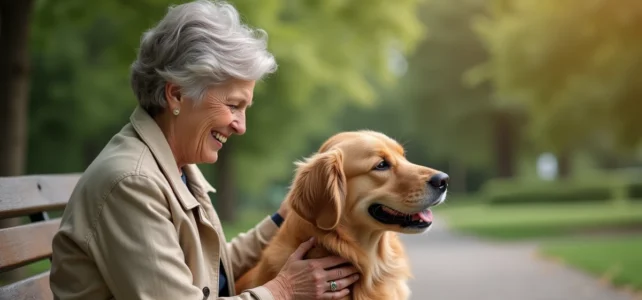
The LOF 2025 ranking published by the Centrale Canine reshuffles the deck: the Golden Retriever surpasses the Australian Shepherd with over 15,000 puppies registered for the year. This shift reflects a growing preference for large, sociable dogs that require a lot of human interaction. Understanding dog breeds and their daily characteristics involves going beyond descriptive sheets and examining what truly impacts life with the animal.
Actual energy expenditure according to breed type
We observe a massive gap between the theoretical needs displayed in breed sheets and the reality on the ground. An Australian Shepherd or a Malinois without daily mental stimulation develops compensatory behaviors (destruction, barking, hyper-attachment) within a few weeks. In contrast, a Bernese Mountain Dog, despite its size, is content with moderate outings as long as they are regular.
The confusion arises from the shortcut “large size = high exercise needs.” The functional group takes precedence over size. Herding dogs (FCI group 1) and terriers (group 3) share a comparable work intensity, even though their sizes are vastly different. A poorly channeled Jack Russell poses as many problems as an under-stimulated Border Collie.
To delve deeper into the specific characteristics of each breed and their impact on daily life, the website Les Chiens ne font pas des Chats details behavioral profiles by dog type.
- Herding and livestock guardian breeds: need for structured tasks (obedience, tracking, fictitious herding), not just free running
- Terriers: high reactivity to external stimuli, need to channel predation through directed play
- Molossoids and mountain dogs: lower activity threshold, but early joint sensitivity requiring outings adapted in duration and terrain
- Companion dogs (group 9): tolerance to solitude varies greatly by lineage, with the Havanese or Cavalier King Charles poorly tolerating prolonged isolation
Coat and daily care: what the type of fur changes concretely
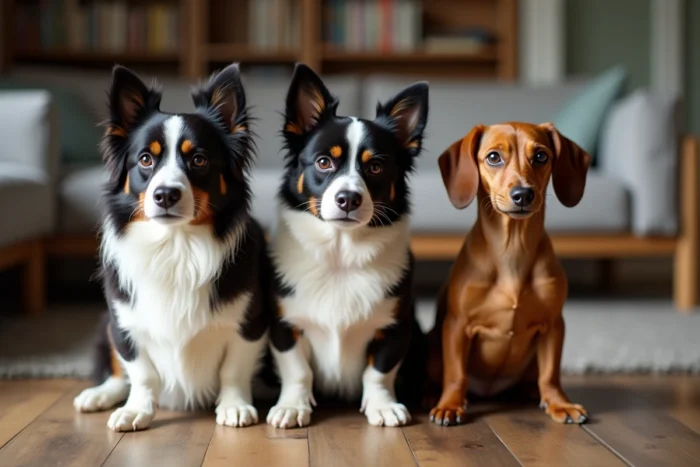
The coat determines the maintenance load much more than the size of the dog. A Royal Poodle, despite its size, hardly sheds, which lightens the cleaning but requires professional grooming every six to eight weeks. A short-haired German Shepherd, on the other hand, sheds continuously and experiences two massive molts each year.
We recommend thinking in three categories of maintenance:
- Short smooth coat (Boxer, Pointer): weekly brushing is sufficient, increased vigilance on visible skin parasites
- Medium-length coat with dense undercoat (Golden Retriever, Australian Shepherd): brushing two to three times a week, detangling behind the ears and under the armpits
- Long or curly coat without undercoat (Poodle, Bichon): regular professional grooming, risk of knots and dermatological issues if neglected
Choosing a double-coated dog in a hot climate poses a real comfort problem for the animal. Nordic breeds (Husky, Samoyed) or mountain dogs (Newfoundland, Saint Bernard) poorly regulate summer heat in Mediterranean areas. Adapting the breed to the local climate avoids recurring veterinary care related to thermal stress.
Health and breed predispositions in daily life
Each breed carries a genetic baggage that influences veterinary expense categories. The shortcut “small dog = lower costs” does not hold. A Cavalier King Charles has a high prevalence of syringomyelia and mitral valve disease. A French Bulldog accumulates respiratory fragilities related to its brachycephalic morphology and dermatological sensitivities to skin folds.
Brachycephalic breeds concentrate the most costly chronic pathologies. Obstructive airway syndrome, exercise intolerance, difficulties in thermoregulation: these constraints weigh on each day, not just during crises.
At the other end of the spectrum, large breeds (Great Dane, Leonberger) face early osteo-articular problems. Hip dysplasia and gastric dilatation-volvulus remain structural risks that selection has not eliminated. Knowing the breed’s predispositions guides the annual health budget and allows for anticipating specialized consultations.
Character and compatibility with real lifestyle
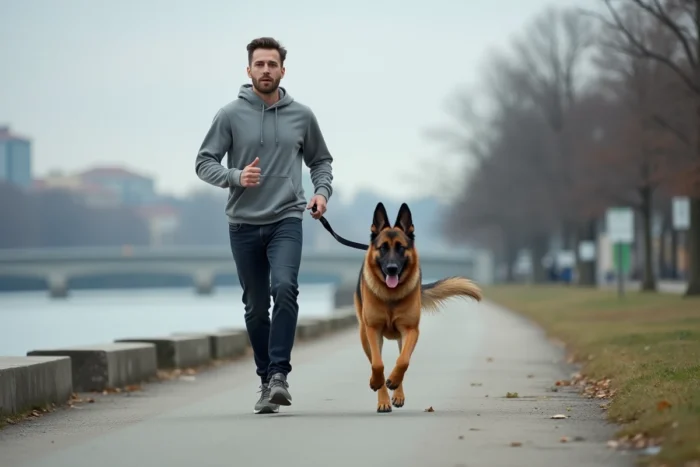
The rise of the Golden Retriever to the top of the LOF reflects a demand for sociable dogs, tolerant of children, and compatible with family life. This profile also exists in the Labrador or the Brittany Spaniel, but each with its nuances. The Labrador eats everything in sight, literally, which generates frequent veterinary emergencies due to foreign body ingestion. The Brittany Spaniel, on the other hand, needs a hunting ground or a regular sporting substitute.
Primitive-type breeds (Akita, Shiba Inu, Basenji) are appealing for their aesthetics but can be perplexing in daily life. Their independence is not disobedience: it is a mode of operation where cooperation is negotiated, not commanded. An Akita does not respond to recall like a Golden. This reality generates abandonments when the owner expects an “easy” dog.
Choosing a breed compatible with one’s real lifestyle drastically reduces the risk of abandonment. Time spent at home, available space, presence of other animals (especially cats), frequency of travel: these parameters filter breeds much more effectively than an aesthetic crush.
The gap between the image of a breed and its actual requirements remains the primary cause of disillusionment. A dog whose fundamental needs are met rarely poses behavioral problems, regardless of its breed. It all starts with a clear choice, based on daily life as it is, not as one imagines it.