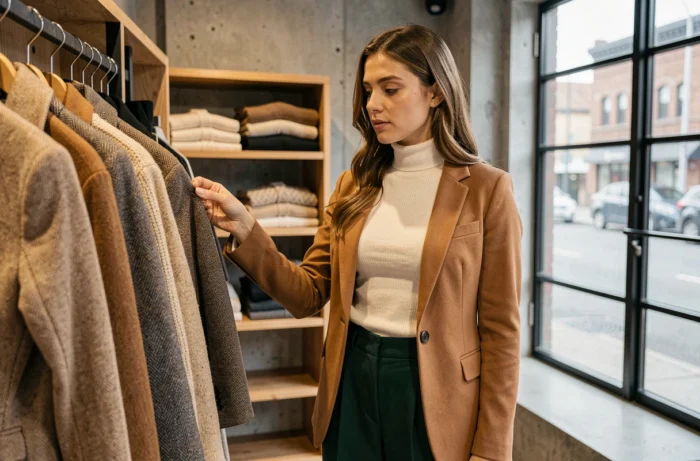
The price of a t-shirt at 3 euros has just changed. Since September 1, 2026, a financial penalty has been imposed on ultra-fast fashion clothing in France, with a surcharge that can reach 50% of the product’s price. This new legal framework reshuffles the fashion trend cards and encourages a rethink of style this season, focusing not on volume, but on more thoughtful clothing choices.
Fast fashion penalty and clothing prices: what is changing concretely
Have you noticed a price increase on certain online retailers since the start of the school year? This is the direct effect of the environmental penalty. The cap is set at 12 euros surcharge per item in 2026, and will rise to 19.50 euros by 2030. Brands offering very large catalogs of non-repairable clothing are the first to be affected.
The system doesn’t stop there. Starting in 2027, advertising for these brands will be completely banned. The requirements for displaying the environmental and social impact of products also change the way collections are presented to the public.
To keep up with fashion news and analyze these developments over the seasons, the pointcontrepoint fr website offers regular analyses on trends and style choices.
In practice, the reflex to buy five pieces a month to keep up with every micro-trend becomes more expensive. This change encourages building a wardrobe around pieces that you actually wear, not just those you post once in a photo.
Colors and materials trending for autumn 2026: focusing on sustainability
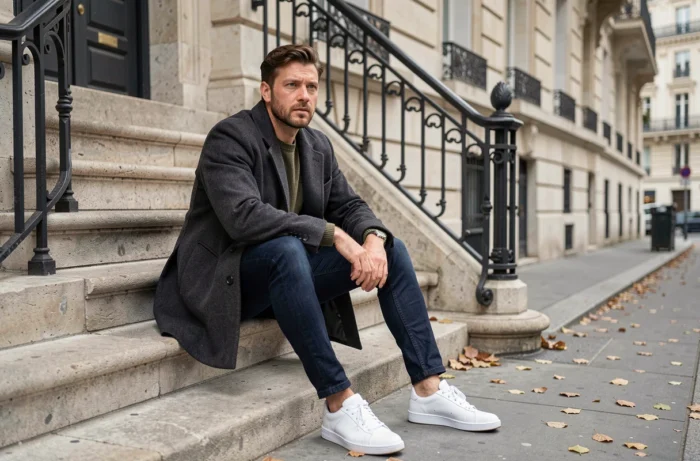
The palettes of the season reflect this shift. Autumn colors are centering on deep and versatile shades: burgundy, midnight blue, forest green, caramel. The idea is not to collect all the trendy colors, but to choose one or two shades that match the rest of your wardrobe.
On the materials side, merino wool, thick linen, and twill cotton are making a strong comeback. These textiles age better than low-quality synthetic fibers and withstand more washes without losing shape. A durable material costs more to purchase but less to wear, when considering the cost per use.
How to choose a lasting material
Check the composition label. A garment containing at least 70% natural fibers (cotton, wool, linen) will hold up better over time than a blend with a high proportion of polyester. Feel the fabric: a sufficiently dense weight is a good indicator of longevity.
Double stitching, buttons sewn with thick thread, and clean hems are details that distinguish a piece designed to last from a disposable item. These are simple habits to adopt in the fitting room or when reading product descriptions online.
Adapting fashion trends to your body shape and silhouette
Following a trend does not mean wearing exactly the same thing as everyone else. Style begins with knowing your own silhouette. A mid-length flowy dress, very present this season, does not fall the same way on an H-shaped body and an A-shaped body.
Here are some concrete guidelines for adapting the key pieces of autumn:
- High-waisted wide-leg pants visually elongate the legs and suit both small and tall silhouettes, provided they are worn with slightly elevated shoes.
- The oversized blazer structures the upper body. For a V-shaped body (broad shoulders), prefer a straight model rather than one with heavy shoulder padding.
- The pleated midi skirt creates volume at the bottom. It balances an inverted triangle silhouette but can weigh down an O-shaped body if the fabric is too stiff.
- The fine turtleneck sweater highlights the shoulder line. For an H-shaped body, cinch it at the waist to define your shape.
The goal is not to correct anything but to understand how a garment interacts with your body to make choices that make you feel comfortable.
Second-hand and unique style: a fashion reflex that has become structural
Second-hand is no longer a marginal alternative. It accounts for about 7% of textile purchase volumes in France, with an average price around 9.50 euros compared to 15.60 euros for new items. Beyond the savings, it is a direct lever for building a style that no one else has.
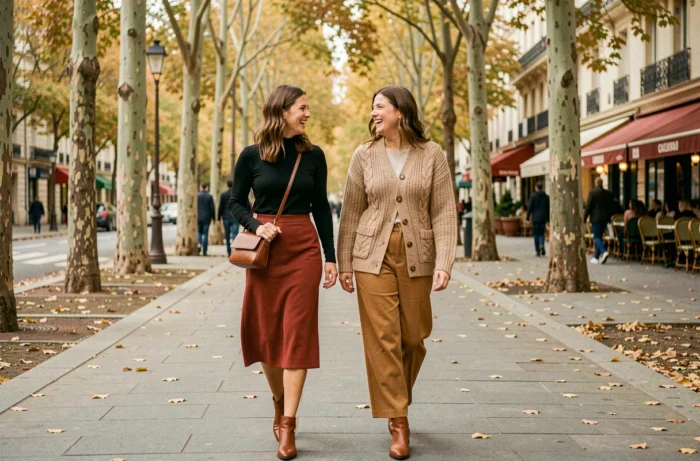
Finding a vintage leather jacket from the 1990s, a geometric patterned silk scarf, or a poplin shirt from a defunct brand is precisely what makes a wardrobe personal. The fashion trends of the season then serve as a lens for interpretation, not a shopping list.
Charity shops or online platforms
The two channels are not equal in environmental terms. According to Oxfam, physical charity shops pollute up to five times less than online platforms like Vinted, mainly due to the individual shipping of each item. Prioritizing the local thrift store, when possible, aligns the fashion gesture with ecological consistency.
This observation does not disqualify online resale, but it invites reflection on the circuit. Grouping purchases, favoring pickup points, and avoiding impulsive returns are simple adjustments.
Building a personal style this season without overconsuming
The real common thread of this season is selectivity. With the penalty on fast fashion, the rise of second-hand and sustainable materials, the conditions are set to break the cycle of purchase-wear-forget-repurchase.
Three concrete actions make a difference:
- Conduct an honest inventory of your existing wardrobe before any purchase. Most possible combinations have never been tried.
- Choose one strong trend of the season (color, cut, material) and integrate it with basics you already own.
- Properly maintain your clothes: cold washing, air drying, storing on appropriate hangers.
A unique style is not built by multiplying pieces, but by mastering those you have. This season, regulatory and economic constraints all point in the same direction: less volume, more coherence.