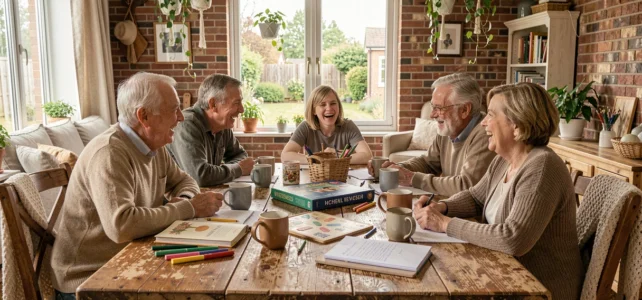
Strengthening family bonds on a daily basis doesn’t necessarily rely on expensive outings or distant vacations. Recent research in family psychology points in the same direction: it’s the quality of the exchange that matters, much more than its duration.
A study reported as part of a Hong Kong project confirms that cooking and eating together impacts family cohesion primarily through the quality of communication, not its duration. Here are ten concrete ideas, chosen for their measurable effect on closeness between generations.
1. Intergenerational Art Creation Workshop
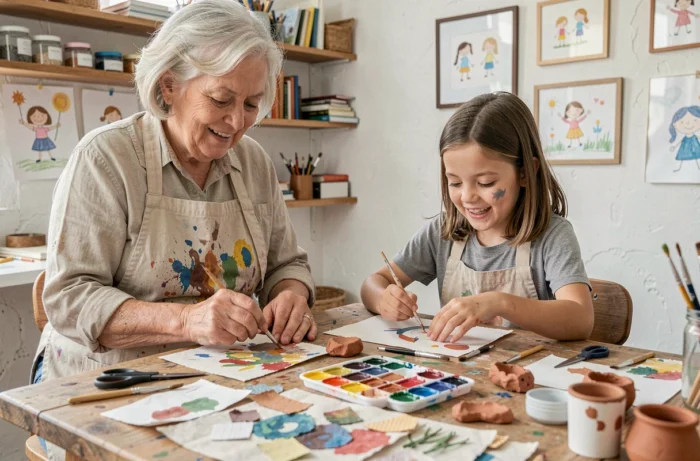
A study published in August 2026 in PLOS Biology shows that creating art together across generations increases brain synchronization. This synchronization is directly associated with an increased sense of social closeness among participants.
Specifically, set up a large sheet on the table and propose a common theme (an imaginary landscape, an absurd family portrait). Watercolor, collage, markers: the medium doesn’t matter. What counts is the shared process, not the aesthetic result.
The resources available around family on Buzz Stream detail other activity formats suitable for all ages, following this same logic of collective creation.
2. Collaborative Cooking with an Unknown Ingredient
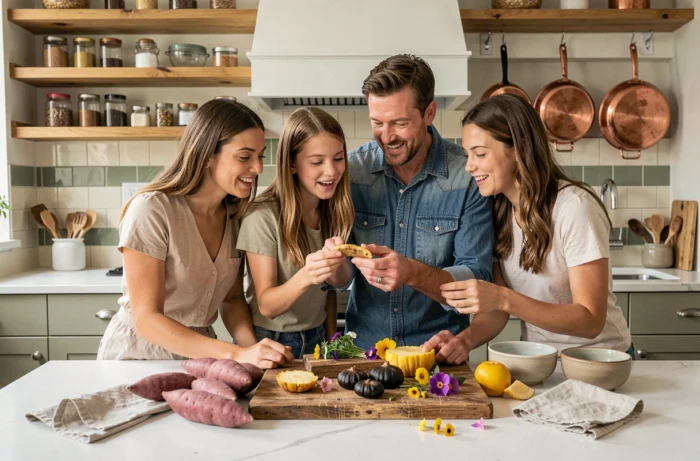
Buying an ingredient each week that no one in the family has ever cooked forces everyone to search together, taste, and experiment. The result on the plate is secondary: it’s the teamwork in problem-solving that creates the bond.
This format works better than simply sharing a meal because it adds a dimension of discovery. The novelty stimulates conversation and avoids the silent routine that sometimes settles around the table.
3. Internal Correspondence Notebook at Home
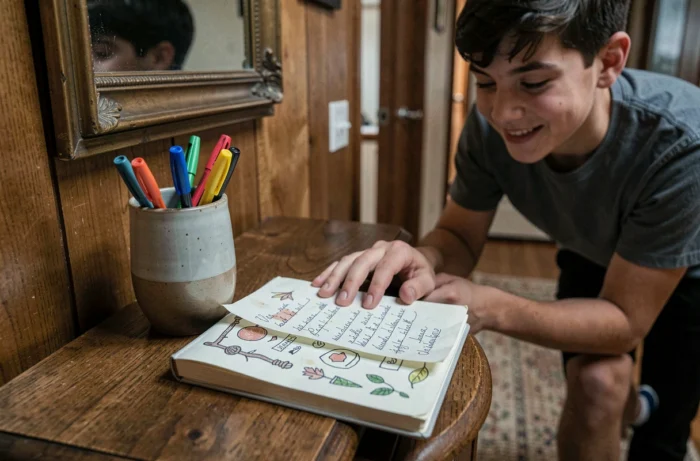
A notebook placed in an accessible location (entryway, kitchen) where each family member can write a note, a drawing, or a question. No obligation to respond immediately: the notebook circulates at its own pace.
This system works particularly well with teenagers, who sometimes find it easier to express themselves in writing than verbally. Asynchronous writing reduces the pressure of face-to-face interaction and gives everyone time to formulate their feelings.
4. Daily Walk Without a Fixed Destination

Fifteen minutes of aimless walking, without screens, is enough. The movement side by side (rather than face to face) encourages conversation among both children and adults.
Vary the routes: let a child choose the direction at each intersection. This daily micro-adventure in nature or the neighborhood transforms a mundane trip into a moment of connection.
5. Structured Weekly Family Meeting
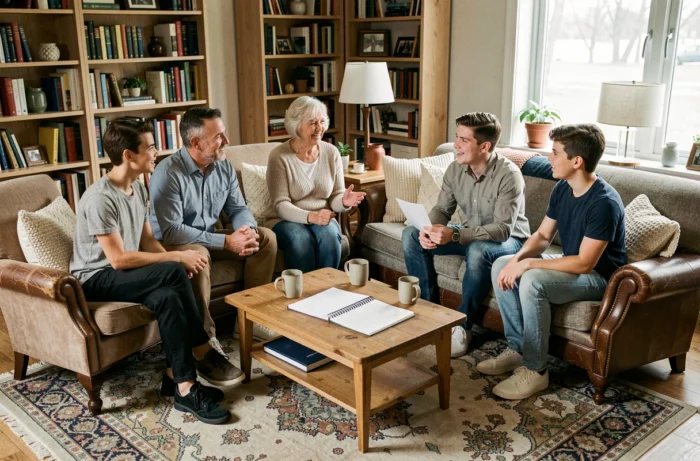
Set a short time slot (about twenty minutes) where each member takes turns speaking on three points: what went well this week, what posed a problem, and a suggestion for the following week.
The structure matters more than spontaneity here. An agenda, even minimal, prevents the meeting from turning into a blame session. Children learn to formulate a request, and parents learn to listen without immediately correcting.
- A talking stick (any object) ensures that the speaker is not interrupted
- Decisions made are noted and reviewed the following week
- The role of moderator rotates among all members, including the youngest
6. Thematic Family Photo Challenge
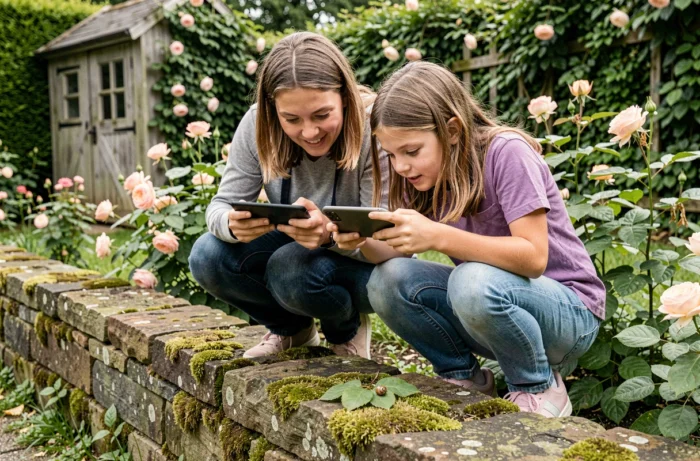
Each day or week, a theme is launched (textures, shadows, red, smiles). Each member captures a photo with their phone or a disposable camera. The pictures are compared in the evening.
The shared perspective on a common theme reveals each person’s personality. A six-year-old does not photograph “symmetry” like a parent would. These differences become a natural topic of discussion, without forcing the exchange.
7. Alternating Read-Aloud Sessions in the Evening
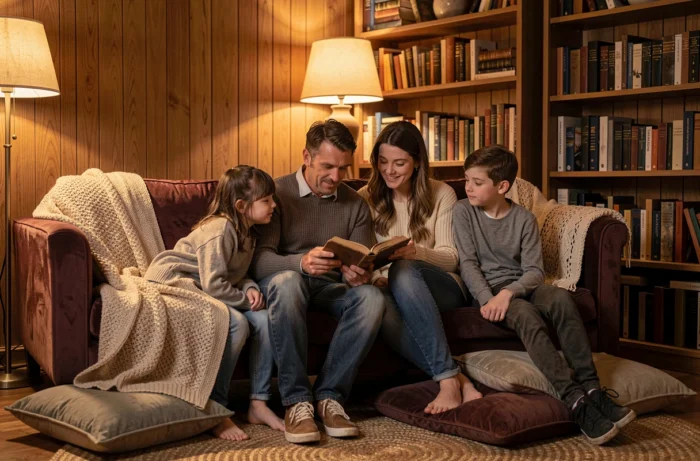
Choose a novel or a picture book and alternate readers each evening. Parents read to the children, then the children read to the parents. This activity works well beyond the assumed age for shared reading.
With teenagers, opting for a captivating story (science fiction, mystery) maintains interest. Sharing a story creates a common narrative thread that fuels conversations throughout the day.
8. Family Gratitude Jar
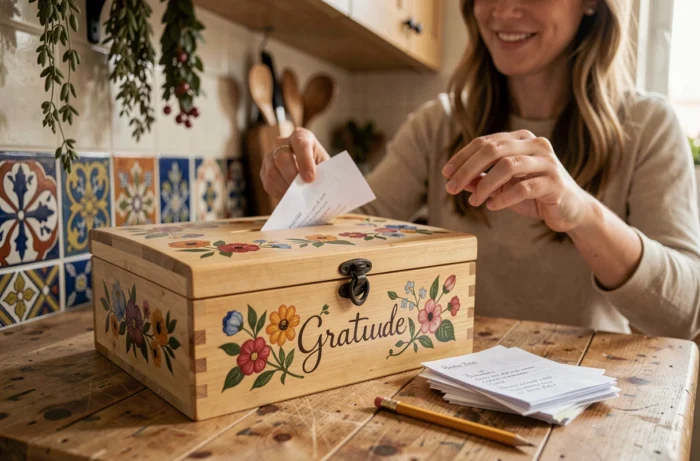
A jar, some papers, a pen. Each member slips in a note describing a positive moment experienced as a family whenever they wish. The jar is opened together once a month.
Reading these accumulated moments reinforces shared positive memory. Research on family communication shows that families who regularly verbalize their gratitude report stronger cohesion.
9. Cooperative Board Games Instead of Competitive Ones
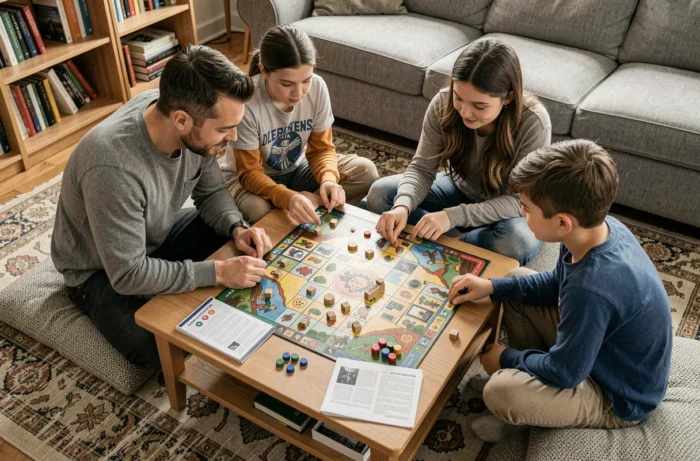
Cooperative games (where all players win or lose together) change the family dynamic. No more frustrated losers, no more mocking winners. Siblings collaborate instead of competing.
Some criteria for choosing well:
- Game duration under 30 minutes to keep the attention of younger players
- Rules explainable in under five minutes
- Mechanism that gives an active role to each player, not just the most strategic ones
10. Annual Family Time Capsule
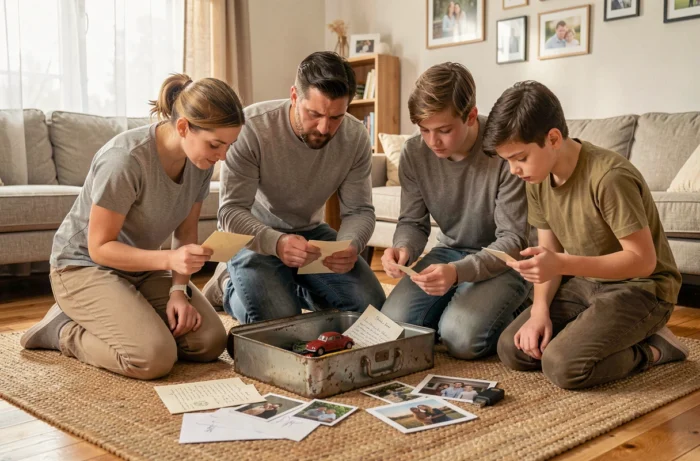
Once a year, each member places an object, a drawing, or a letter to their future self in a box. The box is sealed and opened the following year. This ritual creates a narrative continuity in the family’s life.
Opening the previous year’s capsule measures the journey each person has taken. Children grow, concerns change, and this tangible trace gives weight to shared memories.
None of these ideas require a budget or special equipment. The common thread remains the same: family activities that sustainably strengthen bonds are those where communication is active, where everyone contributes, and where regularity takes precedence over intensity.