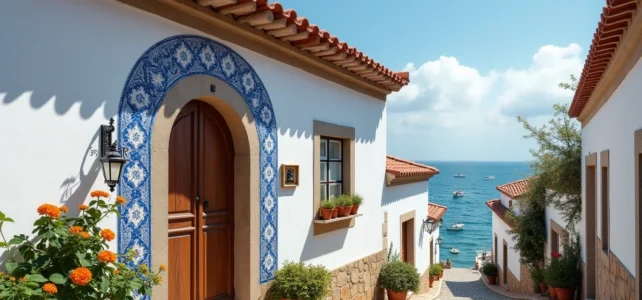
Fisherman houses in Portugal evoke lime-washed facades, narrow alleys, and proximity to the ocean. However, their prices vary dramatically from one region to another, to the point that the same type of property can cost ten times more depending on the chosen coastline. Understanding these discrepancies before starting a search helps to direct the budget towards areas where purchasing remains realistic.
Price Discrepancy of Fisherman Houses According to Portuguese Coasts
The Portuguese coastline does not form a uniform market. Available data outlines three very distinct price tiers for small traditional houses near the sea.
| Coastal Area | Indicative Price Level | Recent Trend |
|---|---|---|
| Algarve (highly sought-after areas) | Very high, sometimes exceeding one million euros | Strong increase, almost no accessible properties |
| Lisbon Coast and Comporta | High to very high | Rapid rise, driven by international demand |
| Silver Coast (Nazaré, Óbidos, Peniche) | Moderate to high | Gradual increase, still some opportunities |
| Alentejo Coast (excluding Comporta) | Moderate | Less tense market, broader supply |
A report dedicated to the Algarve in 2026 reveals that in certain coastal sectors, there are no houses available for less than one million euros. Old, dilapidated houses are being sold for around 600,000 to 700,000 euros. This threshold makes the search for an affordable fisherman house in these areas practically illusory for an average budget.
In contrast, the Silver Coast, which stretches between Lisbon and Porto, still offers modest-sized properties at prices incomparable to the Algarve. The towns of Nazaré or Óbidos maintain a fabric of small traditional houses, even as tourist pressure increases there.
To find a fisherman house for sale in Portugal without exceeding the budget, it is therefore essential to start by targeting the right portion of the coastline rather than searching everywhere simultaneously.
Rise in Real Estate Prices in Portugal: What the Numbers Measure
The surge does not only concern the Algarve. According to an Euronews analysis based on Numbeo data, published in June 2026, real estate prices in Portugal have increased by nearly 240% in ten years, while wages have only risen by 59% over the same period. In Lisbon, it now takes about 18.7 years of average annual income to buy a home.
This pressure is reflected across the entire coastline, including on small coastal houses. Properties located in once-neglected fishing villages are now attracting international demand that drives up the bids.
The gap between the rise in prices and that of local incomes explains why many Portuguese are leaving coastal areas. For a French buyer, this means increased competition with other foreign buyers, and shortened negotiation times.
Restrictions on Tourist Rentals in Coastal Villages
A factor often underestimated by buyers concerns local regulations on short-term rentals. Since 2024-2025, several Portuguese seaside municipalities have tightened their rules, inspired by practices in other European cities.
The adopted measures include:
- Caps on tourist rental licenses by neighborhood, limiting the number of properties that can be rented to vacationers in the same area
- Requirements for independent access in mixed-use buildings, making some terraced houses ineligible for seasonal rental
- Longer and more expensive registration procedures to obtain local accommodation status
These restrictions directly impact the rental profitability of a fisherman house purchased with the intention of renting it out for part of the year. A property bought to serve as a second home with rental income may become blocked if the municipality has reached its quota.
Before any purchase, checking with the câmara municipal (town hall) whether the property is eligible for a tourist rental license is a step that many foreign buyers overlook.

Concrete Criteria for Evaluating a Fisherman House Before Purchase
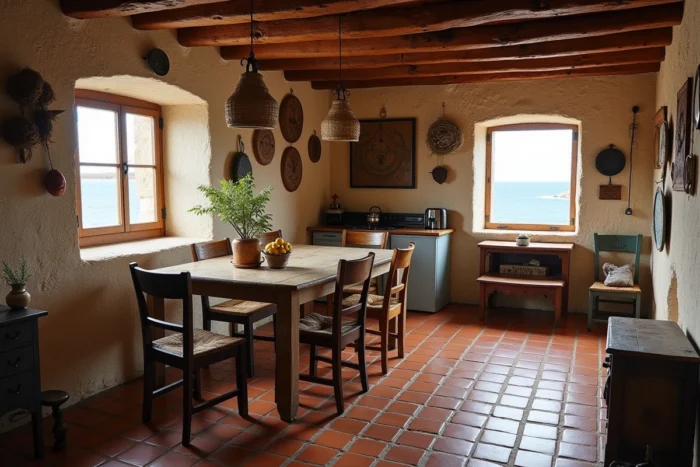
Portuguese fisherman houses share architectural characteristics that raise specific technical questions during visits. Thick stone or traditional masonry walls provide good thermal inertia but may conceal problems with rising damp, common in buildings close to the sea.
Several points deserve particular attention:
- The condition of the roof and framework, often made of old wood, exposed to salt spray that accelerates degradation
- The connection to sewage networks, as some fishing villages still have outdated systems or non-compliant septic tanks
- The right to use the surrounding land, which may differ from the property rights of the building in certain Portuguese legal configurations
- The actual living space, as these houses often consist of small rooms with limited ceiling heights
The potential for extension depends on the municipal master plan (PDM) of the municipality. Some classified areas or those located by the sea prohibit any modification of the existing volume. A two-bedroom house may therefore remain so permanently.
Renovation Costs to Anticipate
Houses sold at attractive prices almost always require compliance renovations. Renovating the kitchen, bathroom, upgrading electrical systems, and addressing moisture issues represent significant expenses. The purchase price alone does not reflect the total cost of the project.
Having a technical assessment conducted by a local engineer before signing the contrato-promessa (preliminary sales agreement) remains the most reliable precaution. Local real estate agencies can direct buyers to professionals accustomed to this type of construction.
The market for fisherman houses in Portugal has changed in nature over the years. The most publicized areas have reached price levels that exclude most average budgets, while other parts of the coastline still offer accessible options. Cross-referencing location, local rental regulations, and the actual condition of the building remains the safest method to turn a search into a coherent acquisition.