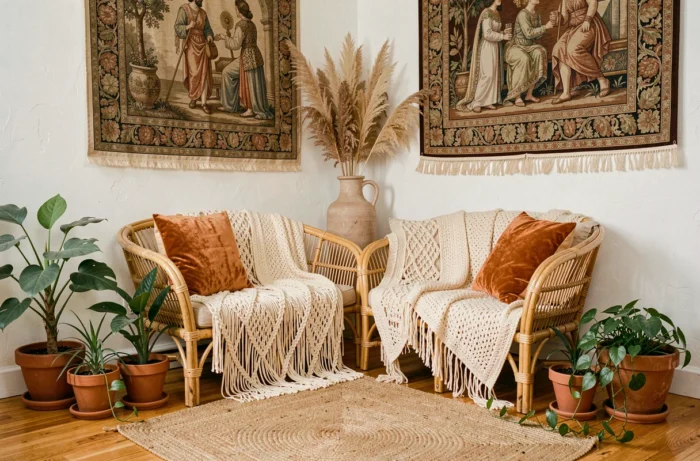
Creating a successful boho-chic look at home means choosing materials that age well and avoiding those that cause problems as soon as the first damp season arrives. Boho style combines wood, rattan, linen and cotton to create a warm atmosphere, but each material responds differently depending on the room, the available space and everyday use. Before choosing decorative items, it’s worth comparing their practical limitations.
Boho-chic materials: durability and care by room
Most decorating guides list rattan, linen, unfinished wood and macramé without explaining where they may not be suitable. Comparing materials by room helps you make lasting choices rather than purely aesthetic ones.
| Material | Living room / Bedroom | Bathroom / Damp room | Care |
|---|---|---|---|
| Rattan | Ideal (armchair, mirror, pendant light) | Not recommended: doesn’t cope well with prolonged humidity | Dust regularly; avoid standing water |
| Linen | Curtains, cushions, bedspread | Suitable for an airy curtain, provided the room is ventilated | Creases easily; wash gently |
| Unfinished wood | Coffee table, shelves, frames | Suitable if treated (with oil or natural wax) | Prone to staining; protect it |
| Woven cotton | Rugs, wall macramé, throws | Avoid on the floor (mould risk) | Machine washable; dries slowly |
| Artisan ceramics | Vases, pots, decorative objects | Perfect (water-resistant) | Almost none |
Rattan and linen are the two most delicate materials in the boho palette. Rattan warps and darkens in a poorly ventilated bathroom. Creased linen can look neglected rather than relaxed if fabric items aren’t shaken out regularly or ironed at a low temperature.
For a damp room, artisan ceramics and treated wood are the most reliable options. A stoneware vase or an oiled wooden tray brings the same boho warmth without the drawbacks.
Creating a boho-chic look with Fabrique de Sty lets you combine these materials into a cohesive whole while taking the room’s intended use into account.
Boho decor in a small home: circulation and storage
A successful boho-chic look in a small space follows one simple rule: every decorative object should also serve a purpose. Piling cushions, throws and baskets on the floor of a 30-square-metre studio blocks the flow of movement and creates a sense of clutter, not warmth.
Define zones by function, not by accessories
In a living room that also serves as a home office or reading nook, it’s tempting to add more decorative elements to mark out each area. A more effective approach is to use a woven rug to define the living area and an open unfinished-wood shelf to visually separate the workspace.
Discreet storage preserves the boho atmosphere better than an overflowing decorative basket. Stackable natural-fibre baskets work as both storage and decor. They make use of vertical space rather than taking up more floor area.
Make use of the walls instead of the floor
Wall macramé, rope-and-wood hanging shelves and suspended plants free up the floor while preserving the boho feel. In a small home, you should be able to count the items placed on the floor on one hand:
- A woven cotton or jute rug, large enough to anchor the living area but not so thick that it makes vacuuming difficult
- One or two stackable baskets that provide practical storage (for magazines, throws or chargers)
- A potted plant on the floor only if space allows; otherwise, hang it
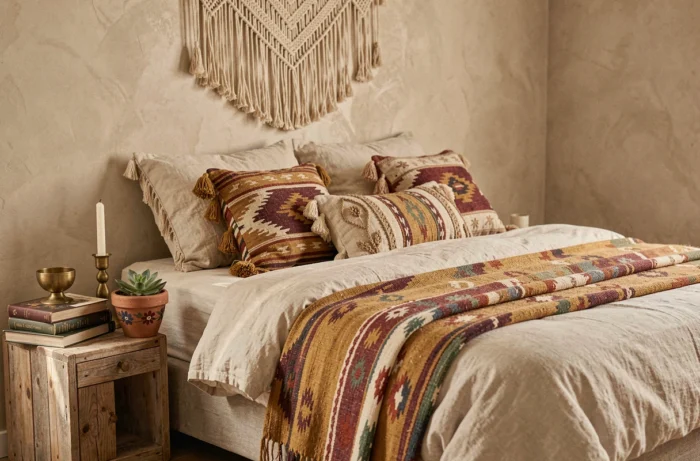
This vertical approach works just as well in a narrow bedroom: a macramé headboard and two wall-mounted shelves are a great alternative to a bulky bedside table.
Boho colours and textiles: choose using clear criteria
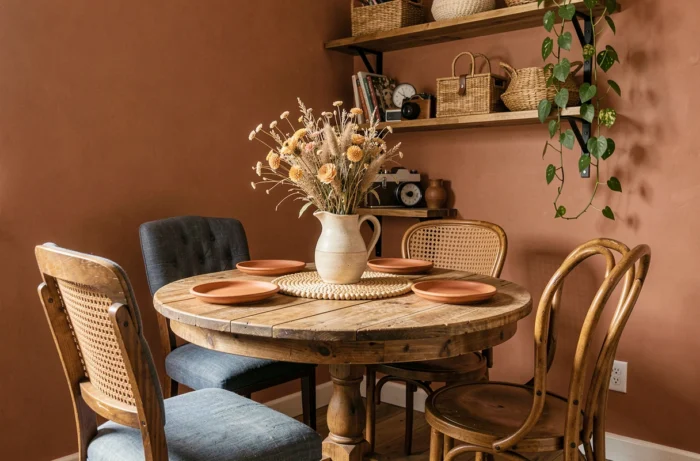
Boho-chic colour palettes centre on earthy tones (terracotta, ochre and sand), complemented by off-white and touches of sage green. The challenge isn’t choosing a colour, but balancing textures to avoid visual overload.
Three different textures per room are enough to create depth: a smooth fabric (linen or cotton), a chunky weave (macramé or bouclé wool) and a hard surface (wood, ceramics or aged metal). Any more, and the mix can disrupt the harmony.
Textile labels and sustainable choices
For curtains and cushion covers, checking the label for an environmental certification provides a concrete guarantee about the fabric’s composition. A certified linen curtain often costs the same as a polyester curtain printed with an ethnic pattern, but lasts significantly longer.
- Choose organic cotton or European linen for textiles that come into direct contact with you (covers, throws)
- Check the label for a certification such as OEKO-TEX or GOTS
- Avoid synthetic blends designed to imitate natural fabrics: they pill quickly and lose their texture
You can recognise a durable boho textile by its feel and label, not by its printed pattern.
Plants and ethnic-inspired objects: add them without creating clutter
Houseplants contribute to a boho atmosphere, as long as they don’t turn the living room into a garden centre. Two to four well-placed plants have more impact than a dozen small pots scattered around the room.
Choose species based on the room’s actual light levels. A pothos or philodendron can tolerate a dimly lit living room. A fiddle-leaf fig needs direct light. Choose a plant to suit the room, not the inspiration photo.
The same principle of restraint applies to ethnic-inspired objects such as woven baskets, pottery and figurines. An item brought back from a trip or found at a flea market tells a story. Ten items bought as a set from a home decor website look like a copy-and-paste job.
Keeping, repairing or repurposing what you already own is still the approach most in keeping with the boho spirit. Repurposing an existing piece of furniture by sanding it or changing its handles costs less and creates a more personal result than buying a new item labelled “boho style”.
Boho-chic decor isn’t measured by the number of objects in a room, but by how well the chosen materials suit the actual use of each space. A warm interior comes down to three or four thoughtful choices, not a pile-up of trends.